Recognize the moment
Look through the illustrated fronts and choose the experience that feels closest—not necessarily exact.
Free tools for real moments
Young people and the adults beside them should not have to wait for a training date to access a more thoughtful next step. These resources are designed to interrupt certainty, protect dignity, and make difficult moments more manageable.
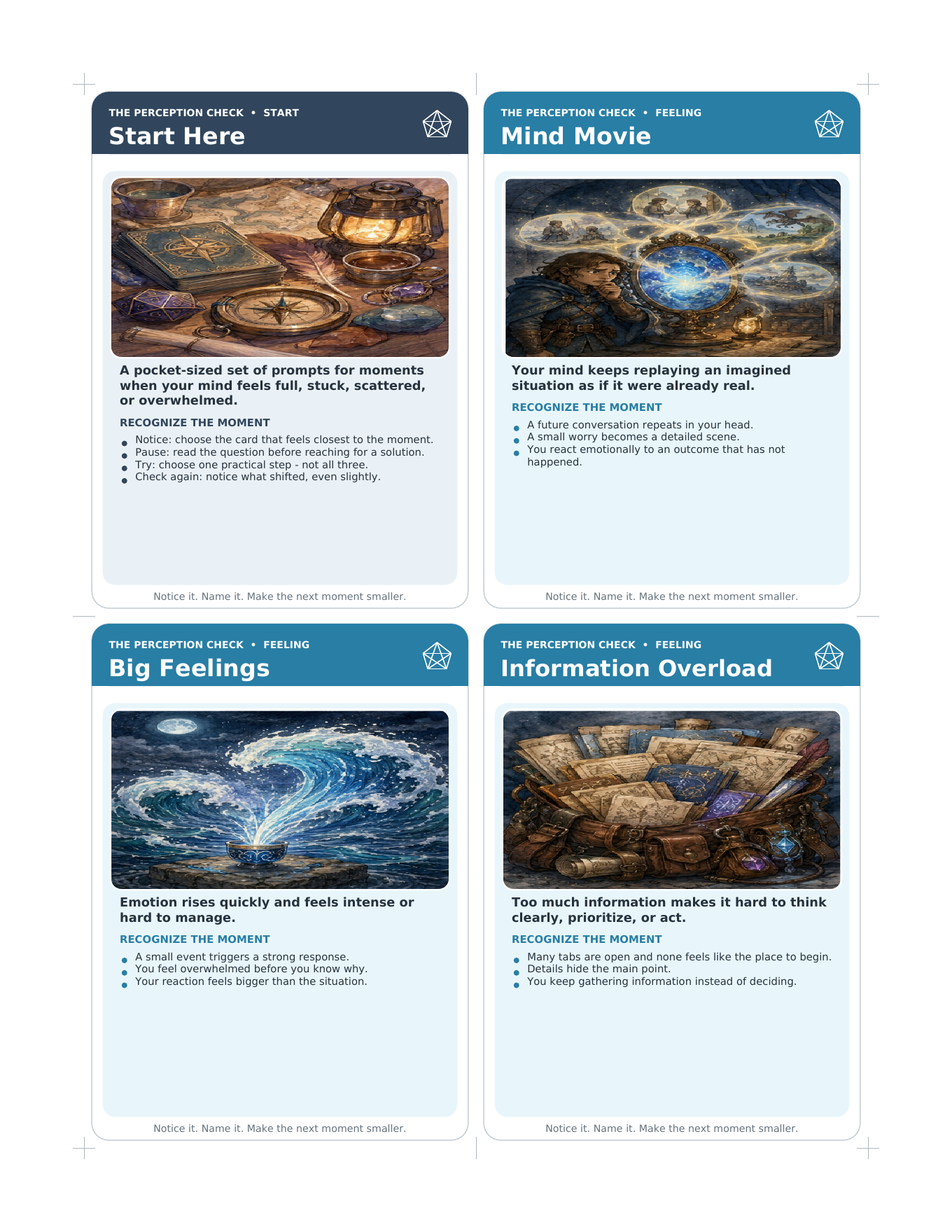
32 illustrated, double-sided cards · six color-coded categories
New free resource
A printable deck for moments when your mind feels full, stuck, scattered, overstimulated, or overwhelmed.
Each card begins with a recognizable experience—such as a “mind movie,” decision freeze, hyperfocus, social fatigue, masking, or an energy crash. The reverse offers one grounding question, three practical options, and a brief explanation of why those steps may help.
How to use the deck
This is not a test, and there is no perfect card. The purpose is to give a difficult moment a name and make the next step smaller.
Look through the illustrated fronts and choose the experience that feels closest—not necessarily exact.
Turn the card over. Read the prompt before reaching for a solution. Let it help you identify what your brain or body may need.
Try one practical step, not all three. Regulation is not another assignment you have to complete perfectly.
Notice what changed, even slightly. Keep what helped, adapt what did not, and return to the card when you need it.
Flexible by design
Keep a few cards in a bag, desk, car, or calm corner for moments when finding the right words is difficult.
Offer choices without demanding disclosure: “Does one of these feel close?” The person always gets to pass.
Use selected cards to teach shared language around attention, sensory needs, energy, boundaries, and recovery.
Use the cards to support curiosity—not to label, diagnose, or decide what another person is experiencing.
Printing instructions
Printers can feed paper a little differently. A test sheet lets you check your specific printer before committing the whole deck.
The cards do not diagnose, provide therapy, or replace individualized professional support. If someone is in immediate danger or crisis, use the appropriate local emergency or crisis resources.
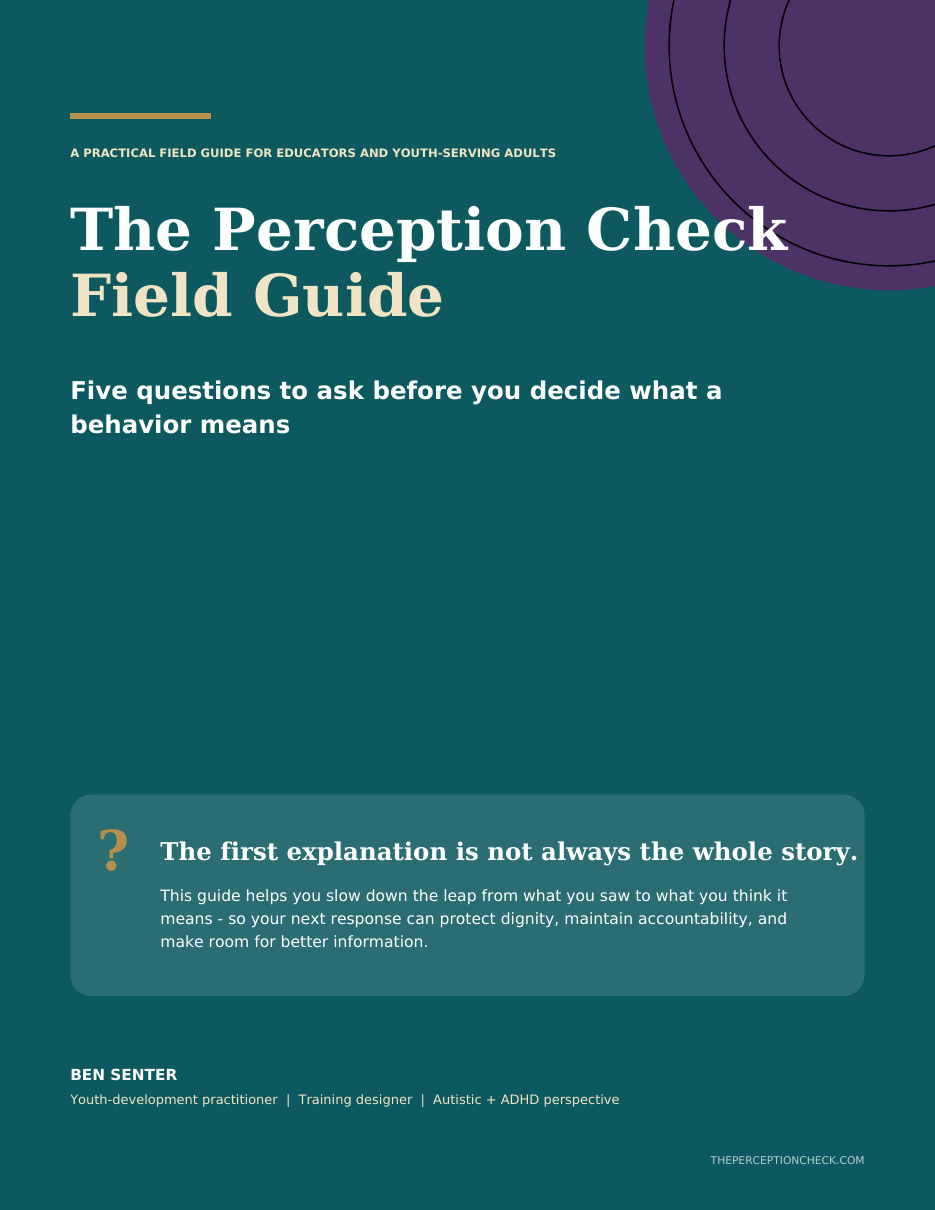 10-page field guide
Also available free
Five questions for separating what you observed from the story your brain added—plus a realistic scenario, reflection worksheet, and pocket reference.
“Use it to interrupt certainty—not to replace a relationship.”
Ready to go deeper?
Training helps teams build the shared judgment, language, and habits that a printable resource cannot create by itself.
Start a Conversation →