Pause
Regulate yourself before interpreting the moment.
A curiosity-first method for youth-serving adults
The Perception Check helps educators and youth-development professionals look beyond behavior, challenge assumptions, and respond with clarity, compassion, and accountability.
◈ Built for real rooms, real pressure, and real young people.

THE FOUNDATIONAL IDEA
“Behavior is information before it is a discipline problem.”
The core practice
Adults make meaning quickly—especially under pressure. The method creates a short, repeatable path between a young person’s behavior and the adult’s response.
Regulate yourself before interpreting the moment.
Separate what you observed from the story you assumed.
Look beneath the behavior for context, need, and skill.
Choose a response that preserves dignity and builds accountability.
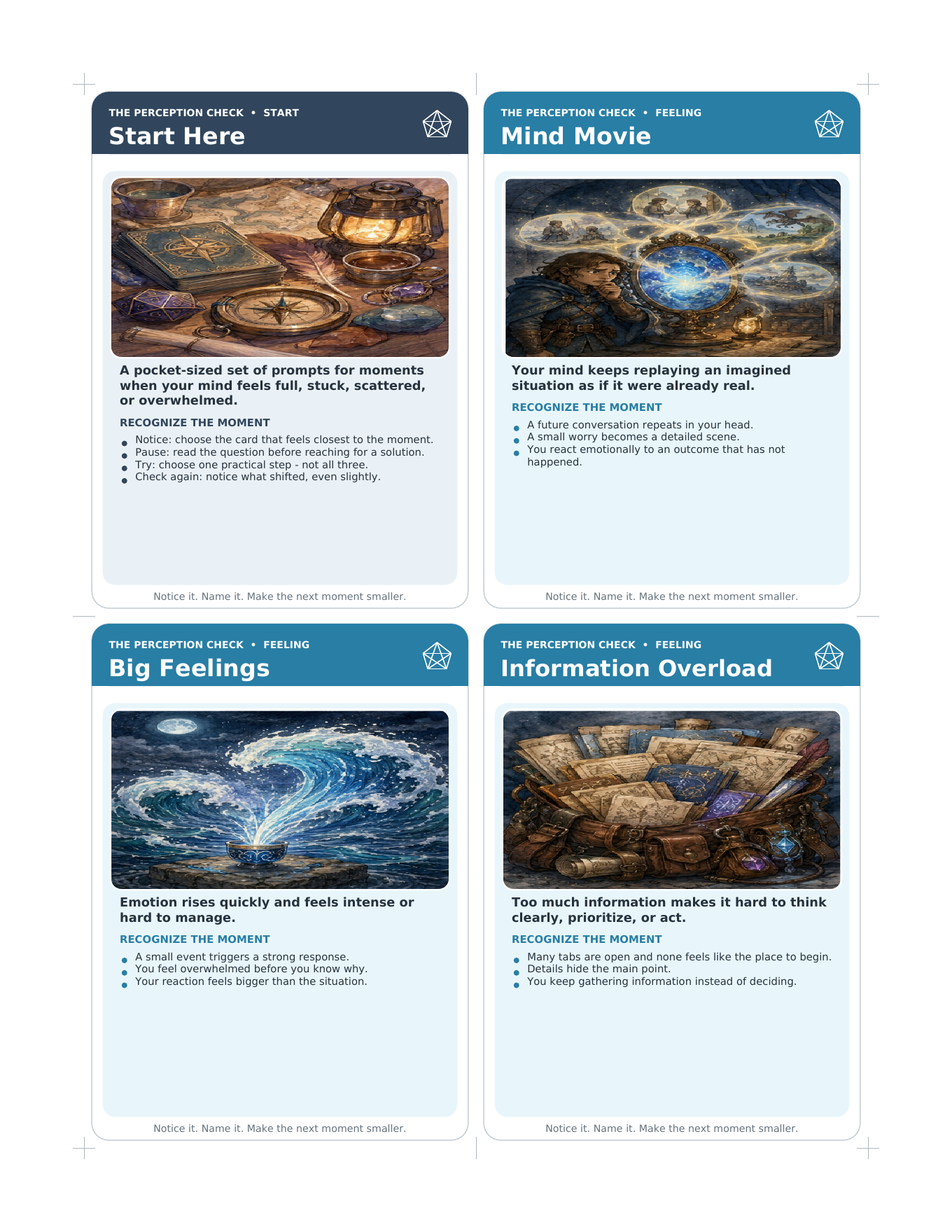 32 illustrated cards · Print front and back
New free resource
The Neurodivergent Reset Cards help name experiences like overstimulation, decision freeze, hyperfocus, masking, and energy crashes—then offer one grounding question and three practical ways forward.
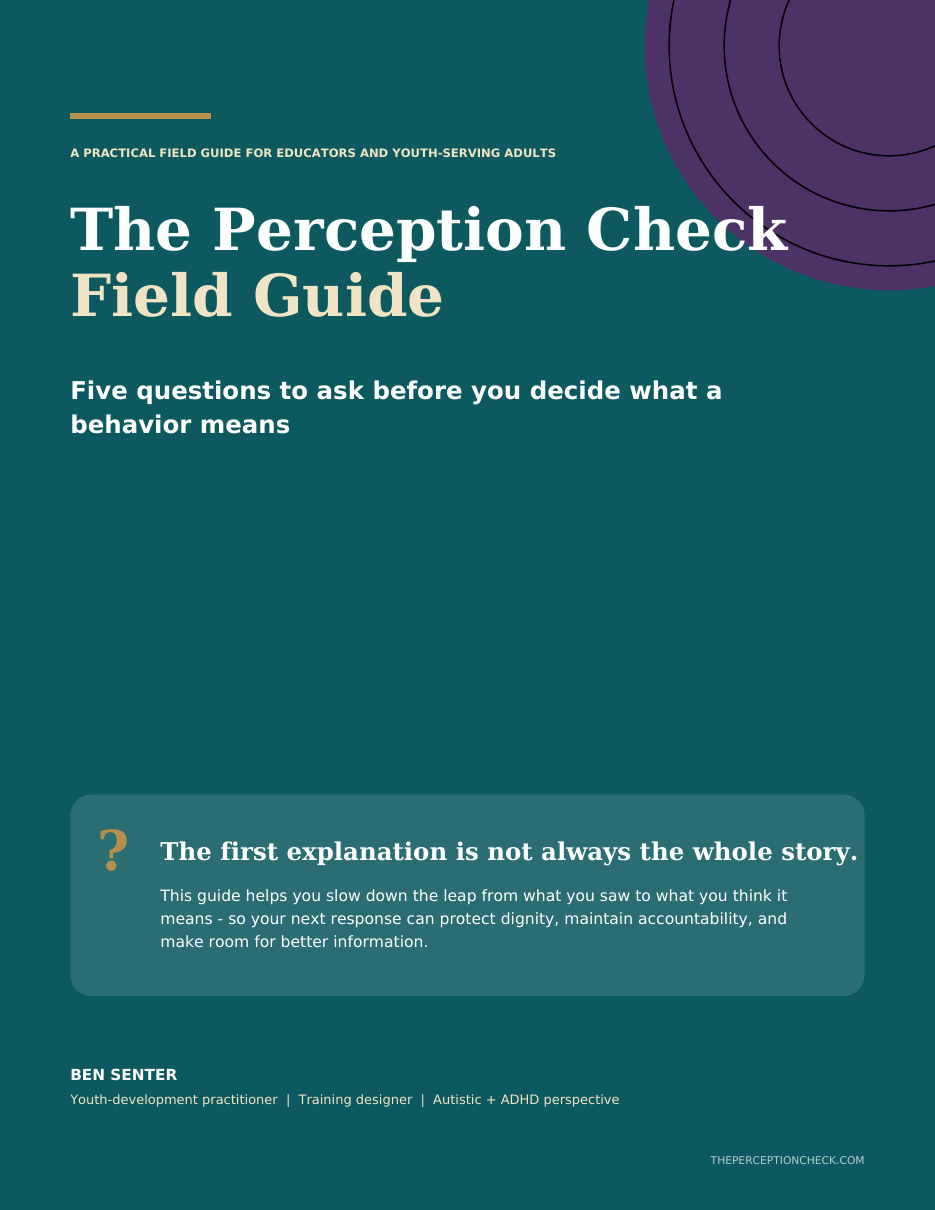 10-page field guide
Free practical resource
A thoughtful pause can change what happens next. This premium field guide gives educators and youth-serving adults five questions for separating what they observed from the story their brain added.
“Use it to interrupt certainty—not to replace a relationship.”

Creator · Practitioner · Storyteller
Meet the creator
Youth-development practitioner. Training designer. Creative educator.
Ben has spent more than two decades working alongside young people and the adults who support them. Since entering youth development in 2002, he has developed and delivered more than 70 trainings to over 1,000 participants and directly supervised more than 250 staff members.
As an autistic and ADHD professional living with physical disability, Ben understands personally and professionally what can happen when visible behavior is interpreted without its missing context. He created The Perception Check to help youth-serving adults replace reflexive judgment with skilled curiosity—without sacrificing structure, boundaries, or accountability.
Learning that travels back to the work
The Perception Check turns research on stress, bias, neurodiversity, adolescent development, and restorative practice into language adults can actually remember in a difficult moment.
Explore training & speaking →Practical, scenario-driven learning for educators and youth-development teams.
Shared language, reflection tools, and repeatable protocols staff can use immediately.
Research translated into clear, useful practice—not another binder that collects dust.
Designed for the adults beside young people
The mission
The Perception Check exists to help youth-serving adults replace reflexive judgment with skilled curiosity—so young people experience greater dignity, stronger relationships, clearer expectations, and more meaningful support.
Ready for a different kind of conversation?